Xiuquan Wang
Applied Mathematics | Computational Biology | Biomedical AI
Department of Mathematics & Computer Science
Tougaloo College
Tougaloo, Mississippi, USA
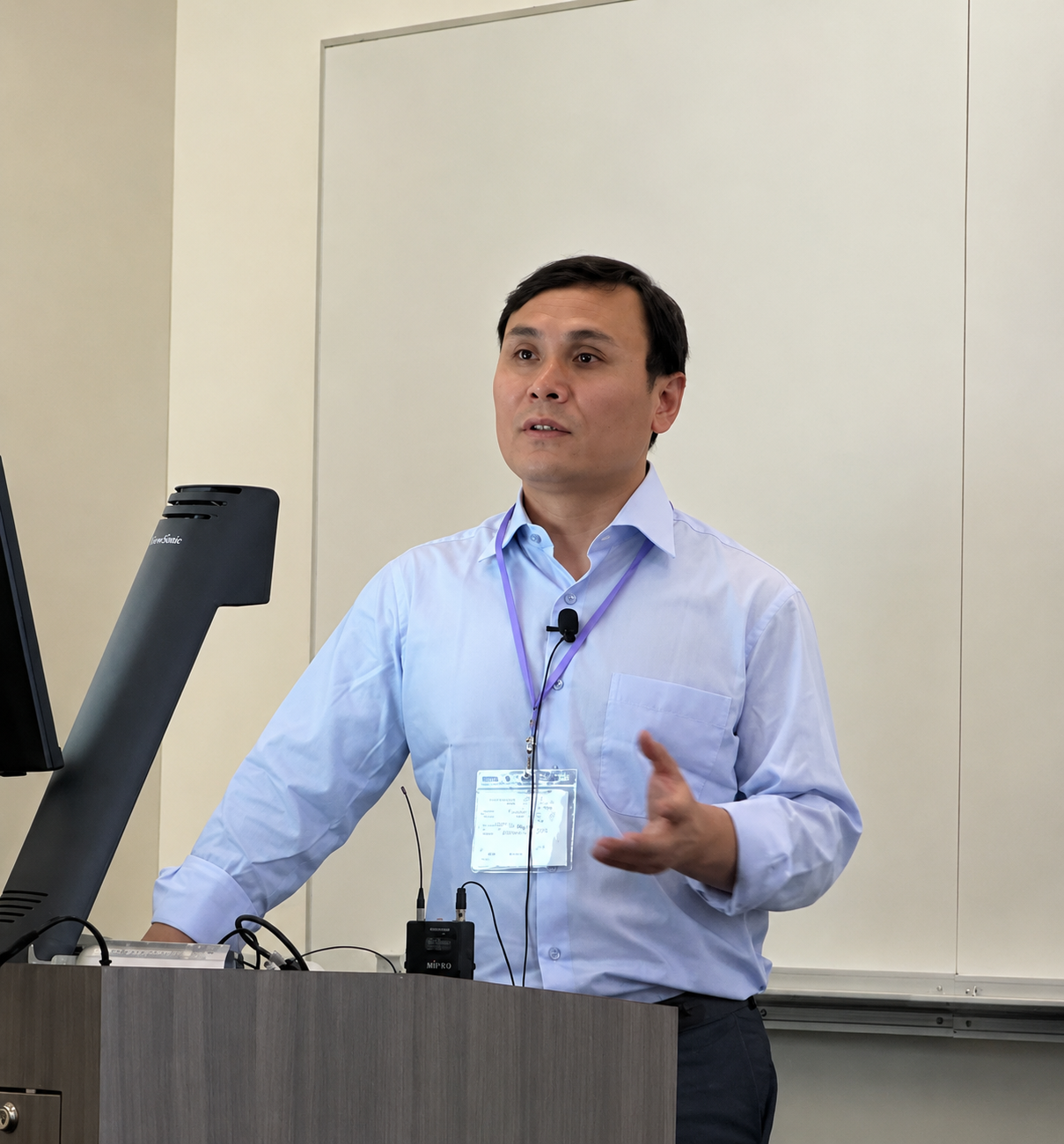
I am Xiuquan Wang, Ph.D., an Associate Professor of Mathematics, the H. M. Thompson Endowed Chair in Mathematics, and Chair of the Department of Mathematics & Computer Science at Tougaloo College.
My research lies at the intersection of applied mathematics, computational biology, machine learning, and biomedical data science. I develop mathematical and computational methods for analyzing high-dimensional and large-scale biomedical data, with particular interests in biological state transitions, interpretable machine learning, graph-based analysis, long-read sequencing, and physics-informed modeling. A central theme of my work is to develop methods that are not only computationally effective, but also biologically interpretable and grounded in meaningful scientific structure.
Current Research
-
Macrophage State Transitions and Transcript Isoform Dynamics in Lung Cancer: Developing an integrated computational framework that combines RNA velocity, single-cell trajectory analysis, and long-read RNA sequencing to investigate macrophage plasticity in non-small cell lung cancer. By connecting inferred cellular state transitions with transcript isoform variation, this project seeks to identify molecular programs associated with tumor-related macrophage states and prioritize candidate isoforms for future mechanistic investigation. Preliminary analyses of 34,420 monocyte/macrophage-lineage cells reveal substantial cellular heterogeneity and tumor-associated differences in macrophage composition.
-
Mechanism-Aware Multiscale Modeling of Glioblastoma: Developing mathematical frameworks that combine reaction–diffusion equations, continuum mechanics, inverse problems, and physics-informed neural networks for brain tumor modeling. Current work investigates identifiable measures of tumor infiltration and mechanical mass effect from single-snapshot MRI and connects these physics-derived phenotypes to molecular programs, single-cell states, and spatial tumor organization.
-
BioFilter-EVTS: Biology-Guided Evaluation of RNA Velocity: Developing quantitative methods to evaluate and refine RNA velocity visualizations by distinguishing transition consistency from biological plausibility. BioFilter-EVTS integrates transition probabilities with pseudotime, lineage structure, and marker-gene progression to identify locally ambiguous velocity directions and improve the interpretation of cellular state transitions.
-
Nanopore Long-Read Sequencing and Machine Learning: Developing mathematical, statistical, and machine-learning approaches to extract biological information from Nanopore long-read sequencing data. Current interests include long-read RNA velocity, transcript and isoform analysis, and transformer-based methods for detecting DNA modifications directly from Nanopore signal data.
-
Large-Scale Biological Network Analysis: Applying scalable graph and network methods to investigate cellular relationships, biological heterogeneity, and developmental organization in large single-cell datasets. Current work includes analysis of a cell-cell similarity network containing more than one million embryonic mouse brain cells to identify developmental modules, hub cells, and candidate transition-associated bridge cells.
-
Topology- and Graph-Guided AI for Precision Medicine: Integrating topological data analysis, patient similarity networks, graph neural networks, and explainable machine learning to discover cardiometabolic phenotypes and predict longitudinal disease risk using large-scale biomedical data. This work extends my earlier research in topological data analysis toward modern precision-medicine applications.
I lead and collaborate on externally funded research supported by programs including the NSF HBCU-UP Research Initiation Award, NSF HBCU-UP Implementation Project, and MS-INBRE Project Development Grant. My research combines methodological development with applications in biomedical data science and creates meaningful research opportunities for undergraduate students.
I am strongly committed to research-integrated teaching and student mentoring. I involve undergraduate students in computational biology, data science, machine learning, and mathematical modeling projects, with an emphasis on developing both technical skills and scientific independence. My students have received awards at national and regional research conferences and have pursued advanced study in data science, biostatistics, and related STEM fields.
In addition to my faculty appointment, I serve as a Visiting Data Scientist at the Children’s Hospital of Philadelphia Research Institute.
My long-term research goal is to develop robust, interpretable, and biologically grounded mathematical and computational methods for understanding complex biological systems, while building an interdisciplinary research environment that prepares students for graduate education, scientific research, and data-intensive careers.
news
| Sep 01, 2026 | MS-INBRE Project Development Grant Awarded |
|---|---|
| Aug 01, 2026 | Appointed as the Hazael McFarland (H. M.) Thompson Endowed Chair in Mathematics at Tougaloo College. |
| Mar 01, 2026 | Congratulations to Dania M. Zein on receiving First Place in the Undergraduate Oral Presentation, Data Science Division, at the 2026 Emerging Researchers National (ERN) Conference! 🎉 |